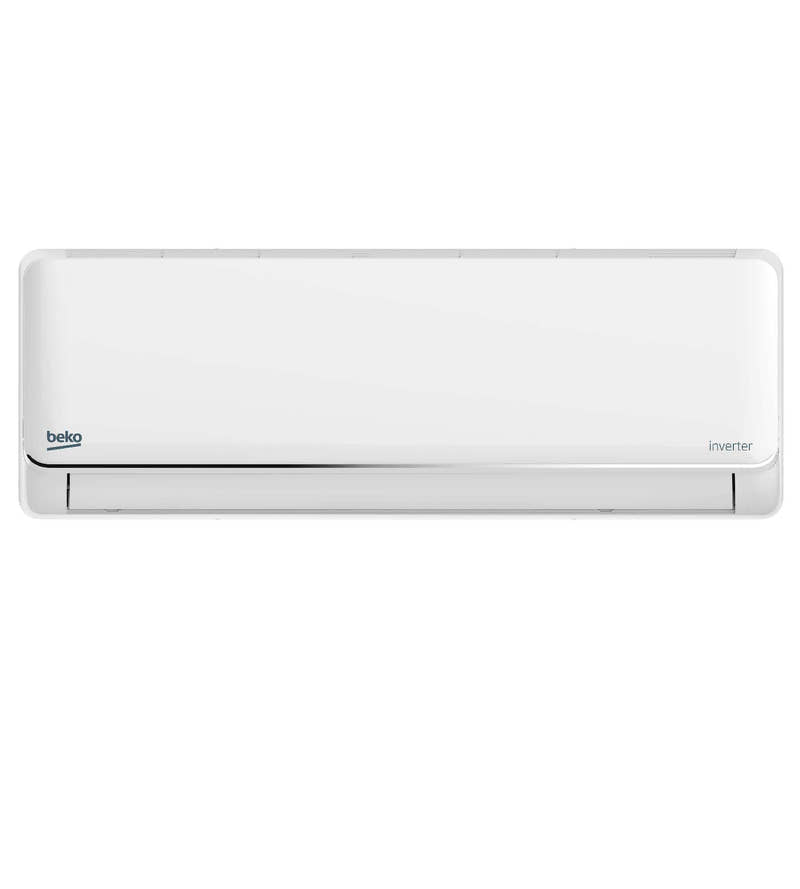
Air Conditioning Installation: €200 and Four Documents
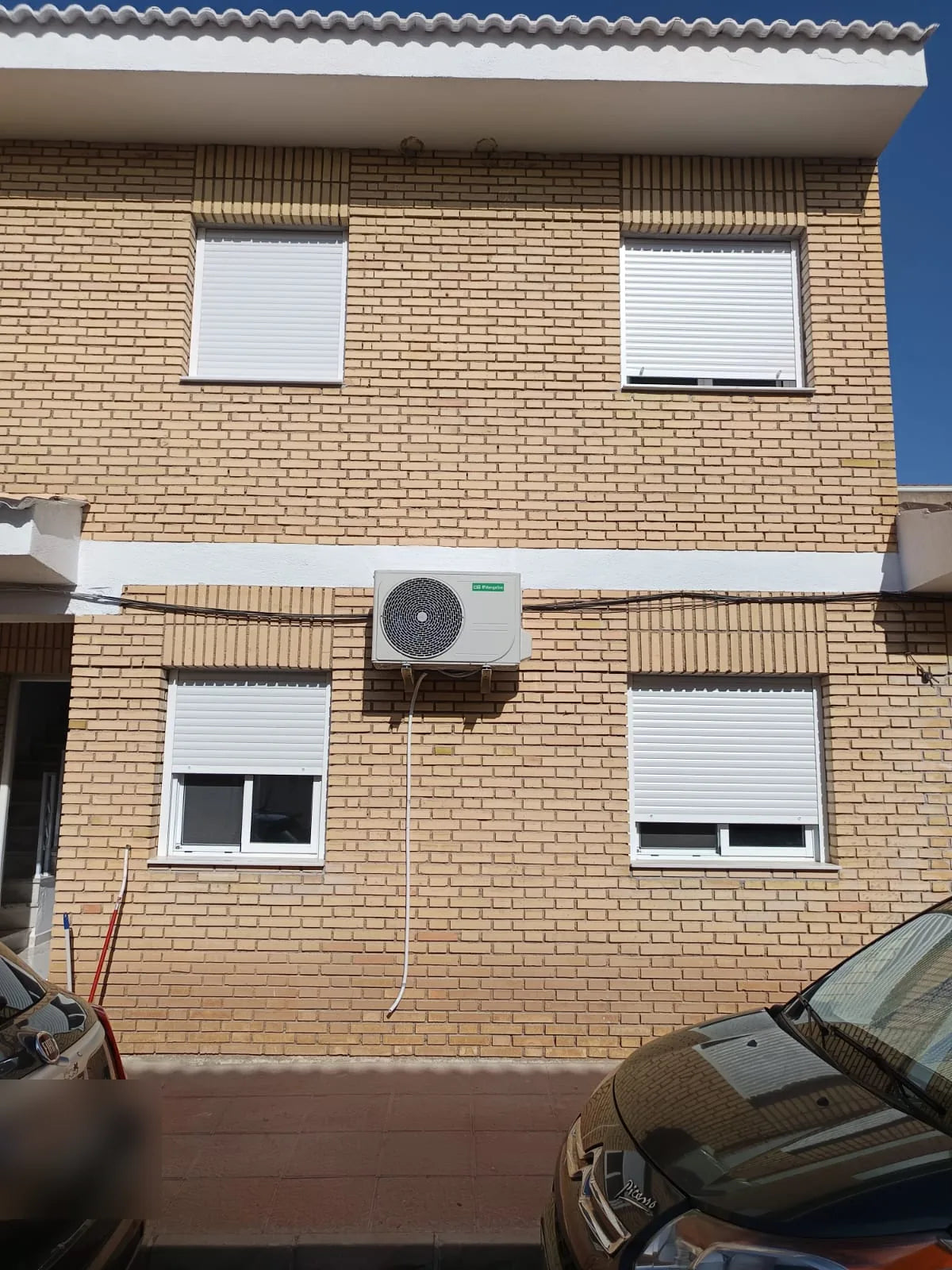
The scene repeats itself every July. Someone walks in with the split model noted on their phone, has already checked the frigorías, has more or less made up their mind, and drops the question almost in passing, half-turned towards the door: “fine, and what about fitting it?” Two hundred euros per unit, VAT included.
That is where the conversation splits in two. Some raise an eyebrow: two hundred euros for a morning’s work. Others ask whether everything really is included or whether the small print turns up later.
Both questions have the same answer, and it is hardly ever told in full. What you see of the fitting is the bulky part: the technician arrives, drills, hangs two units and leaves. What you do not see is the time before. Or the vacuum in the circuit. Or the folder of papers that stays in a drawer at your home once the van has turned the corner.
And that folder is half the bill. What you pay for is not two hours of drilling: it is being able to prove, three years from now, that this unit was fitted as the regulations require. The day something fails. Or the day you sell the house.
Before the drill, there is a visit
Before touching anything, someone comes to your home. It is not a sales courtesy: it is where almost everything that can go right or wrong later is decided.
We check where the indoor unit will sit, so that it does not blow on the bed or the sofa. The outdoor unit takes more work: whether there is room on the façade, terrace or patio; whether the sun will hit it full-on all afternoon; whether it can be reached to be cleaned inside five years from now; whether it will end up right beside the neighbour’s window. Then the route of the copper pipe and how many metres it comes to. Where the condensate can drain without becoming a nuisance. And what is behind the wall we have to drill through, which in the houses of this area can be a flimsy partition or forty centimetres of old masonry.
That visit produces the one thing you really want to know early: whether your case fits the standard installation or whether something more is needed. And we tell you beforehand, not with the unit already hanging and the technician looking for somewhere to plug it in. That visit is already included in the €200.
We cover who comes to do it in another article, so we will not repeat ourselves here. And if you are still unsure about the unit, start with the guide to frigorías by room size: fitting a badly chosen unit impeccably does not fix anything.
The two to four hours, from the inside
This is what happens on fitting day, in order, and why each step is where it is:
- Brackets. The indoor unit, level. The outdoor unit, on a base or firm brackets. A badly anchored outdoor unit vibrates, and that vibration ends up as noise and, over the years, as fatigue in the connections.
- Wall passage. The hole is drilled with a slight downward slope towards the outside, so that the drain has somewhere to go and no rainwater comes in through the hole.
- Copper and insulation. There are two lines and each one has its own insulation sleeve, overlapped at the joints. This is not about a pretty finish: very cold refrigerant flows through there, and left bare it condenses water along the whole run and loses cooling before it reaches the room.
- Flaring and tightening. The most delicate point of the whole job. A crooked flare, or a nut tightened too much or too little, does not burst: it leaks gas slowly, over months.
- Electrical connection. The right cable section, the connection between units and its protection in the consumer unit.
- Condensate drain. With a continuous slope outwards and no stretches where water can stop. A split running in August in Vera or Huércal-Overa produces quite a lot of water a day.
- Vacuum in the circuit. With a pump and for as long as it takes. It is the step that costs most to cut short, and we spot it straight away.
- Gas and tests. The valves are opened, we check there are no leaks, take measurements and leave the unit running and verified. Then five minutes explaining the modes, sensible temperatures and how to take out the filters to clean them.
All of that, plus the paperwork, is what the standard €200 installation includes, together with a three-year guarantee on the labour.
What you do not notice in the first summer
Almost everything that can be done badly in an installation has one awkward feature: you do not notice it in the first summer. The unit cools, the house is fresh, everyone is happy. The fault shows up two or three summers later, when nobody connects one thing with the other and it seems the unit “broke down on its own”.
The vacuum that was not done
The pipework circuit comes full of air and ambient moisture. Before opening the gas, all of that has to be drawn out with a vacuum pump. If the step is shortened, air and water stay inside the circuit.
Air does not condense, so working pressures rise and the unit performs below its label. Moisture mixes with the compressor oil and degrades it little by little. At home it looks like this: the first year, nothing; the second or third, it cools less, the unit never switches off and the August bill goes up without anyone having changed their habits. The end result is a recharge, if you are lucky. If not, a compressor, which is the expensive part of the unit.
The water that cannot find the way out
The indoor unit makes water, and plenty of it on humid days. It falls into a tray and leaves through a tube that needs a continuous fall all the way to the drain.
If that tube sags, climbs a stretch or ends where water pools, the tray ends up overflowing. At home: a few drops under the indoor unit on the worst days, a stain growing on the wall or the skirting board, sometimes a damp smell when it starts up. It tends to show up in the second bad August, and by then the paint is already ruined.
The insulation that fell short
It happens mostly in the hidden stretches: the sleeve is cut just short, does not overlap at the joints, or the piece that goes through the wall is left bare. Water condenses there along the whole run. At home: dripping inside the trunking, damp in the false ceiling if the copper runs through it, or a long stain following the line of the pipe. And besides the damp, cooling that you pay for and that is lost along the way.
There is a fourth case that leaves neither stain nor noise: the badly flared connection that loses gas slowly. The only symptom is that, summer after summer, it cools a little less. Nobody calls the technician for “a little less”, and that is how you end up with a breakdown.
The useful part of all this is that it can be checked. You can ask whether a vacuum was done and how long it lasted, run your hand along the pipe to see whether the insulation goes all the way, and look at whether the drain really slopes. With us and with whoever you like.
What is not included in the €200
The standard installation covers most homes, but not all. The following are left out:
- Trunking. If the route is visible and you want it covered, that is material and labour on top.
- Long runs. Beyond the standard distance between units, each extra metre needs copper, insulation and, depending on the unit, an additional refrigerant charge.
- Awkward heights. An outdoor unit on a third floor with no access, or a façade that requires scaffolding or a platform.
- Building work. Chasing walls, passages through floor slabs, ceilings that have to be opened and closed again.
When any of this comes up, it is assessed at the visit, you are given the price up front and nothing is touched until you say yes. That is the deal with the installation, and it still stands when the answer is no.
The four documents
This is the half of the bill you do not see. Four documents, and each one is useful to you for something different.
One: the installation certificate. It is issued and signed by the installation company when the job is finished. It records who did the work, with the details of the authorised installation company, which unit was fitted, where the units ended up, the date and the signature. We always hand it over, even when the unit is small and the regulations do not require anything to be registered with the authorities. It is proof that the unit was fitted as it should have been, and it is the document you are usually asked for when you have to make a claim or when you sell the property.
Two: the itemised invoice. Unit, labour, materials and VAT on separate lines. It serves for the guarantee and it serves to know exactly what you have paid.
Three: the written labour guarantee. Three years, and in writing means with what it covers set out in black and white, not a verbal promise at the door.
And four: the document that depends on your case. The general framework for air conditioning is the RITE, the Regulation on Thermal Installations in Buildings, and there the procedure depends on the power. Below 5 kW of nominal thermal power there is no need to prepare technical documentation or register the installation with the authorities, and that is where most single-room splits fall. From 5 to 70 kW the corresponding technical report is prepared and the installation is registered with the competent body of the autonomous community, each with its own procedure. Several units, or one large one, can cross that line. That is seen at the visit and we tell you. And if the unit leaves the shop without installation, the fourth document is a different one: the declaration on fluorinated gases, which is covered further down.
There is one part that is not a document but a permit. Not just anyone may open the refrigerant circuit: Royal Decree 115/2017 requires that whoever handles equipment with fluorinated gases holds the personal certificate that corresponds to the type of equipment, and that the company is registered. This does not depend on power or size: it applies to any pre-charged split that has to be connected on site, however small. It is not bureaucracy for its own sake. These are powerful greenhouse gases and they are controlled from the moment they leave the factory until they are recovered. The technician who comes to your home holds that certificate and the company is registered; personal details are not published in a blog, but they are shown to anyone who asks.
Two guarantees that get mixed up all the time
It helps to keep them apart in your head, because they cover different things and different people answer for them.
The unit’s guarantee: three years, the legal guarantee in Spain, and whoever sold you the unit answers for it. In practice almost everything is channelled through the manufacturer’s technical service, which has the parts and the brand’s technicians, but the party obliged by law is the seller. It covers defects in the unit: the compressor that comes faulty from the factory, the board that fails, the fan that stops. It does not cover what breaks because of a badly done installation.
The labour guarantee: three years as well, and this one we put on the work done. It covers whatever depends on the fitting: a connection that drips, a drain that does not drain, a fixing that moves. If the fault is in the work, we come back and fix it.
And this is where the papers turn into money. Many manufacturers make their commercial guarantee, the one they give on top of the legal one, conditional on the start-up having been done by authorised personnel and documented. Each brand has its own conditions and they need to be read, but the clause is common. The three-year legal guarantee against the seller is not lost because of that; what nobody covers is a breakdown that comes from a badly done installation. In other words: if on the day the compressor fails you cannot show an installation certificate, the claim starts uphill. It is not that it will surely be refused. It is that you argue from the worst position, with the unit stopped and in the middle of August.
If you buy the unit and your own technician fits it
We do install in our area: Valle del Almanzora, Los Vélez and the Levante of Almería. Albox, Arboleas, Zurgena, Huércal-Overa, Vera, Vélez-Rubio and surrounding places. Outside that we do not fit, and we would rather say so now than promise it and let you down in August.
The unit we do ship. To all of mainland Spain, by Correos Express, at a flat rate of €19.99 per unit. It is charged separately: it is not covered by free shipping from €49.99, because a split is not one of the boxes that go in the normal delivery. And there is one exception because of the weight of the package: units of 6,000 frigorías or more and multisplits are not shipped. Those go only with our own delivery within the area.
The unit leaves with its paperwork. When a pre-charged split is sold without installation, the fluorinated gas regulations require the seller to inform the buyer in writing that the fitting must be done by an authorised company and to hand over the document that the company carrying out the installation then completes and signs. That is the declaration on fluorinated gases, and it comes in the box. One part is signed at the time of purchase; the other is filled in and signed by the company that does the fitting, and it has to be returned to us signed within the year following the purchase, which is what the regulations ask for. Your installer will know what to do with it.
If you would like to see what is available, it is all in the air conditioning catalogue. And if you are still undecided between a split, a portable or a cassette, we have written that comparison too.
Frequently asked questions
How much does it cost to install an air conditioner?
€200 per unit, VAT included, for a standard installation. It includes a prior technical visit, fitting the indoor and outdoor units, electrical connections, copper pipework with insulation, condensate drainage, start-up and tests, an explanation of how to use it, an installation certificate and a 3-year guarantee on the labour. The fitting takes between 2 and 4 hours.
What documents should the person installing my air conditioner give me?
An installation certificate signed by the authorised installation company, an itemised invoice (unit, labour, materials and VAT) and the guarantee in writing. If the power of the unit requires technical documentation, the installation is also registered with the autonomous community. And you can ask whether the technician holds a fluorinated gas handler’s certificate and whether the company is registered: anyone who has them will show them.
Can the manufacturer’s guarantee be refused if a professional does not install the air conditioner?
It can happen with the manufacturer’s commercial guarantee: many brands make it conditional on the start-up having been done by authorised personnel and documented, so without an installation certificate a claim to the technical service starts uphill. The legal guarantee on the unit in Spain is 3 years and the seller answers for it, unless the breakdown comes from an incorrect installation.
What is not included in the €200?
Trunking, long pipe runs, awkward heights and any extra building work. It is assessed at the prior visit, the price is given up front and nothing is done without your approval.
I live outside the Valle del Almanzora. Will you ship me the unit?
Yes, to all of mainland Spain by Correos Express, at a rate of €19.99 per unit that is not covered by free shipping from €49.99. Units of 6,000 frigorías or more and multisplits are not shipped because of the weight of the package. The unit leaves with its declaration on fluorinated gases, which is what the technician who fits it for you needs. We install only in the Valle del Almanzora, Los Vélez and the Levante of Almería.
If this suits you, we are here. Tell us about the room, the square metres and where you think the outdoor unit could go, and we will tell you which unit makes sense and whether your installation fits the standard one or not. No rush and no obligation, on WhatsApp 623 04 44 20 or by dropping into the shop.