

Best value-for-money washing machines 2026: ranking and buying tips
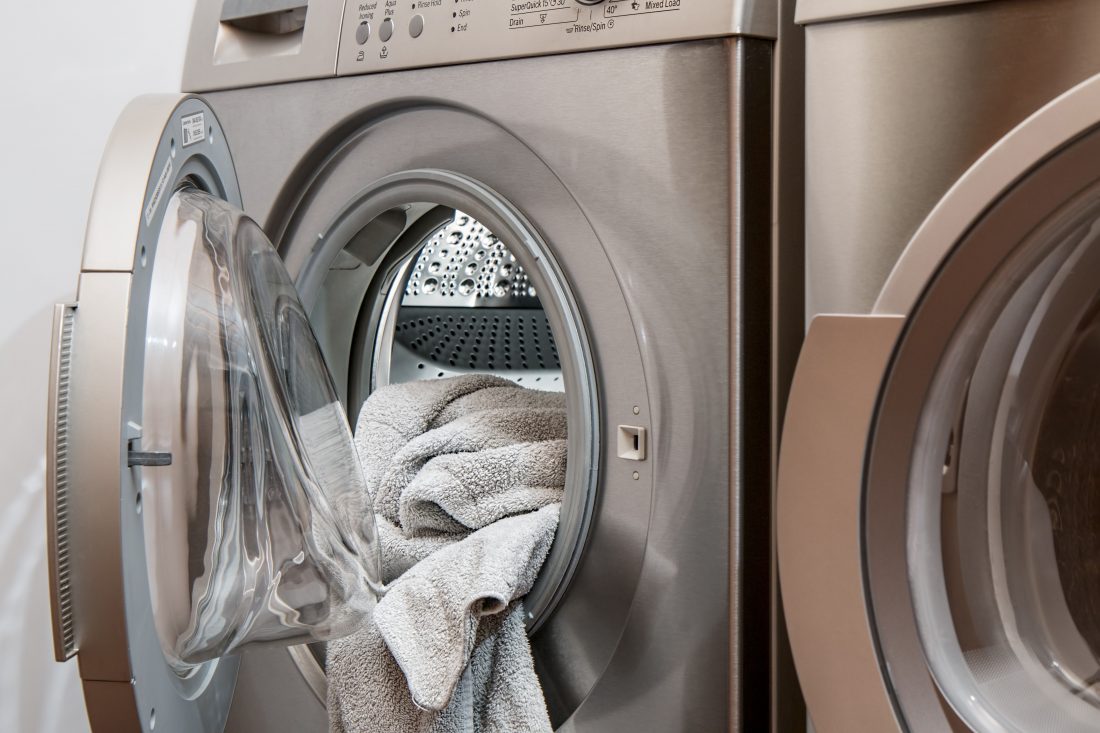
Nobody buys a washing machine often, so hardly anyone remembers what they looked at last time. Every week someone at our counter in Albox asks us which one is best, and the honest answer depends on two things: how many people do laundry in your home and what space the machine has to fit into.
We first published this ranking in March 2022. Most of those models are no longer made, so in November 2026 we rewrote it from scratch with the machines we sell today and the figures from their official energy label. The general advice still holds, and you will find it further down, brought up to date.
In short. For a household of three or four, look for 9 kg, 1,400 rpm, an inverter motor and energy class A. Today that costs between €330 and €420, and under €300 there are 8 kg machines that do the job perfectly well. Paying more makes sense if you want a quiet machine or if it has to go under a kitchen worktop. Your electricity bill, on the other hand, barely changes from one to another.
The 2026 ranking, by type of household
These are machines we actually sell, at their November 2026 prices. If a price changes, the product page is what counts. Most of them we order from the warehouse when you buy: they usually reach Albox within a few days and we call you to arrange delivery.
| Best for | Model | Energy use | Price |
|---|---|---|---|
| Family of 3 or 4 | Hisense WF1Q9041BW, 9 kg | 44.4 kWh | €329.99 |
| Quieter and cheaper to run | Haier HW90-B14367U1, 9 kg | 31.4 kWh | €469.99 |
| Tight budget | Beko B1XW862WSPT, 8 kg | 44.4 kWh | €279.99 |
| Large family | Whirlpool FFB 11469 BV SPT, 11 kg | 53 kWh | €459.99 |
| 82 cm kitchen space | Sharp ES-NIB814BWNA-ES, 8 kg | 47.3 kWh | €359.99 |
| Shallow space | Nilson NL6200AI, 6 kg | not published | €215 |
| 40 cm wide space | Whirlpool TDLR 7220LS, 7 kg | 78 kWh | €369.99 |
Energy use is the official EU label figure: kilowatt hours per 100 washes on the Eco 40-60 programme. Nilson does not publish it on its product sheet, and we would rather not make it up.
For a family of three or four: Hisense WF1Q9041BW

This is the one we would suggest to almost anyone who comes in unsure. It takes 9 kg, spins at 1,400 rpm, has an inverter motor and a steam function, and uses 44.4 kWh per 100 washes, 10 % less than class A requires. It measures 85 × 60 × 54 cm, so it fits a standard space with room for the water connections. It reaches 75 dB on the spin cycle: you will hear it, but in a utility room it won't bother you.
At €329.99 it gives the most of any machine we sell. Models costing €100 more are quieter or connect to your phone; they don't wash any better.
If you want it quiet and cheap to run: Haier HW90-B14367U1

Of all the machines we sell, this one uses the least energy (31.4 kWh per 100 washes) and is the quietest: 68 dB on the spin, because its Direct Motion motor turns the drum without a belt. We recommend it when the machine goes in the kitchen or in a flat where you hear everything. It takes 9 kg, spins at 1,400 rpm, is 60 cm deep and costs €469.99.
One step down is the Hisense WF3S9043BW3: 9 kg, 34.2 kWh, 72 dB and wifi for €419.99.
On a tight budget: Beko B1XW862WSPT
For €279.99 you get 8 kg, 1,200 rpm, an inverter motor, steam and the option to add clothes once the wash has started. It uses 44.4 kWh, the same as the 9 kg Hisense, and at 52 cm deep it fits where others won't. For a couple or a household of three it is more than enough.
For large families: Whirlpool FFB 11469 BV SPT
With 11 kg a double duvet goes in without squashing it, and a household of five or more ends up running fewer loads. It spins at 1,400 rpm, has Whirlpool's 6th Sense sensors and steam, and uses 53 kWh per 100 washes. It costs €459.99. Watch the depth: 61 cm.
If price comes first, the TCL FF1214WA0ES takes 12 kg for €389.99, but it is 65 cm deep and won't fit many utility rooms. Measure first.
For the kitchen space: Sharp ES-NIB814BWNA-ES

Under a fitted kitchen worktop there are 82 cm of height, and a standard washing machine is 85 cm tall. This Sharp is an integrated model: it is exactly 82 cm and sits hidden behind a cabinet door, which is your own kitchen door (the machine comes with the hinges to hang it). It takes 8 kg, spins at 1,400 rpm, has an inverter motor with a 10-year Sharp guarantee and uses 47.3 kWh. It costs €359.99.
If you would rather see the machine, the Bosch Serie 6 models with a removable top also come down to 82 cm. We compare them in Bosch or Balay: which washing machine to buy in 2026.
For shallow spaces: Nilson NL6200AI
It is 40.5 cm deep, while a standard machine is over 55. It solves narrow utility areas and kitchens where nothing else fits. It takes 6 kg, spins at 1,200 rpm, has an inverter motor and costs €215. It suits one or two people. If there are four of you, go up to 8 or 9 kg even if you have to move something.
If the space is 40 cm wide: Whirlpool TDLR 7220LS
This is a top loader: you load it from above without bending down, and it is only 40 cm wide. It takes 7 kg and spins at 1,200 rpm, and its label shows class E, with 78 kWh per 100 washes. No top loader reaches the higher classes, because the drum is small and narrow. We only recommend it when nothing else fits. It costs €369.99.
What to look at before you buy
Drum capacity
For decades the norm was 5 kg, or even 4.5. Today that is a mistake unless money is very tight: 8 and 9 kg machines have come down so much in price that it isn't worth going small. As a guide:
- One or two people: 6 to 8 kg.
- Three or four people: 8 or 9 kg.
- Five or more, or if you wash duvets at home: 10 kg and up.
Something hardly anyone considers: larger machines have stronger bearings, and replacing broken bearings costs so much that the repair can outprice the machine. And with more capacity you run fewer loads a year and the machine works with less strain.
The energy label and what it really uses
In March 2021 the European Union changed the washing machine label. The A+++ classes disappeared and the scale went back to A to G, with a new test method. That is why some customers get a fright when they see a C on a modern machine that is actually efficient. The old letters and the new ones cannot be compared: the Spanish Ministry for the Ecological Transition itself says there is no direct equivalence.
What you can compare is the number underneath: kWh per 100 washes. Between the Haier, at 31.4, and the €329.99 Hisense, at 44.4, the difference is 13 kWh per 100 washes. A typical household runs about 220 washes a year, and with electricity at €0.20 per kWh, which is on the high side, the difference comes to about €6 a year. If you buy the Haier, buy it for the quiet.
Spin speed
We live in one of the sunniest parts of Europe and washing dries on the line in no time, so 1,200 rpm is plenty. If you use a tumble dryer, look for 1,400: clothes come out with less water and the dryer works less. The label sums it up with a letter from A to G (spin class), and almost every 1,400 rpm machine gets a B.
Inverter motor
A few years ago it was a premium extra. Today almost every machine we sell has one, including the €215 model. It has no brushes to wear out and adjusts its power to the load, so it runs quieter and lasts longer. Several brands give a 10-year guarantee on the motor, among them Bosch, Balay, Samsung, Hisense and Sharp. The rest of the machine carries the 3-year legal guarantee that comes with everything we sell.
Noise
The label gives the spin noise in decibels and a noise letter: up to 72 dB is class A. If the machine lives in a utility room or the garage, don't pay extra for quiet. If it is in the kitchen or next to a bedroom, then yes: between 68 and 78 dB there is a big difference in a house at night.
Size and type of loading
The measurement behind most returns is height. A freestanding machine is 85 cm tall, and under a kitchen worktop there are about 82. For that space there are two options: an integrated machine or one with a removable top. Check the depth too, which ranges from 40 to 65 cm depending on the model, and leave a couple of centimetres for the water connections.
Front loaders are 60 cm wide and let you stack a dryer on top. Top loaders are 40 cm wide and you load them without bending, but they use more energy. Whenever it fits, go for a front loader.
Programmes and display
Don't worry too much about programmes: every machine has more than you will use. What does matter is being able to change the temperature and the spin speed. Washing cold or at 20 degrees saves more electricity than any difference on the label. The Eco 40-60 programme takes almost four hours because it heats the water less; for everyday washing they all have a quick 15 or 30-minute cycle.
Washer-dryers
As a rule, we don't recommend them. A washer-dryer costs almost the same as a separate washing machine and dryer, and it dries fewer kilos than it washes, so you end up taking clothes out mid-cycle. Also, a dryer never touches water and lasts many more years than a washing machine; when they come as one, a fault on the washing side takes the dryer down with it. We only recommend one when there is no room for two appliances. We explain it in detail in Washer-dryer: is it worth it?, and if you are thinking about a dryer, in our dryer guide.
After-sales service
Nobody buys a washing machine expecting it to break, but it can happen. We don't sell any brand that has ever left us stuck with a customer, and we advise against unknown brands just to save a few euros. In our area, the brands with the best after-sales service right now are Bosch and Balay (they share BSH's official service network, which covers the whole province), Whirlpool, Indesit and Infiniton.
What we recommended in 2022
For anyone looking for the old ranking: in 2022 our favourites were a 9 kg Indesit, which was the shop's best seller for years, a 9 kg Balay with the ExtraSilencio motor, a 10 kg Infiniton with automatic detergent dosing, a 7 kg Milectric (Infiniton's second brand) and an 8 kg LG with a belt-free Direct Drive motor. Almost none of them are made any more. Why we liked them still holds: a belt-free or inverter motor and an after-sales service that answers the phone.
How we deliver it
We only supply large appliances in the Almanzora Valley, the Levante Almeriense and Los Vélez, with our own van. We don't send them by courier to the rest of Spain, because this way we leave them connected and can look after them if anything goes wrong. On delivery we connect it to the water and power points you already have; if you need anything else, ask us beforehand.
Every machine comes with a 3-year guarantee and you have 30 days to return it under our returns policy. If you would like to pay in instalments, we arrange appliance finance with Santander Consumer at our shop in Albox, by appointment, because the paperwork is signed in person. Details are on our finance page.
We are where we have always been, on Avenida 28 de Febrero in Albox, and we are now the fourth generation of a shop that opened in 1923. If you are torn between two models, call us on 950 430 738 or message us on WhatsApp at 623 04 44 20 and we will go through them with the spec sheets in front of us. Every model we sell is in our washing machines section.
Frequently asked questions
What is the best value washing machine in 2026?
For a household of three or four, the Hisense WF1Q9041BW: 9 kg, 1,400 rpm, inverter motor and 44.4 kWh per 100 washes for €329.99 (November 2026 price). If you want less noise and the lowest running cost, the Haier HW90-B14367U1, at 68 dB and 31.4 kWh, for €469.99.
How many kilos do I need?
6 to 8 kg for one or two people, 8 or 9 kg for three or four, and 10 kg or more for five or if you wash duvets at home. If in doubt, go one kilo up: the price difference is small and the machine works with less strain.
Which washing machine fits an 82 cm kitchen space?
An integrated model, such as the 82 cm Sharp ES-NIB814BWNA-ES, or one with a removable top, such as the Bosch Serie 6 WUU28T63ES and WUU28T68ES, which come down to 82 cm without the top. A standard machine is 85 cm tall and won't fit.
Is today's class A the same as the old A+++?
They cannot be compared. Since March 2021 the label runs from A to G and is measured with a different test, so there is no reliable equivalence between old and new letters. To compare machines, look at the kWh per 100 washes shown on the label.
Is it worth paying more for a machine that uses less electricity?
Rarely for the electricity alone. Between a machine using 44.4 kWh and one using 31.4 kWh per 100 washes, with 220 washes a year and electricity at €0.20 per kWh, the difference is about €6 a year. Paying more is worth it for quiet or for size.
Do you deliver washing machines across Spain?
No. We only supply large appliances in the Almanzora Valley, the Levante Almeriense and Los Vélez, with our own van, and we leave them connected to the points you already have.
Can I pay for the washing machine in instalments?
Yes. We arrange appliance finance with Santander Consumer at our shop in Albox, by appointment, because the paperwork is signed in person.

