Electric thermal radiator: how many watts and for which room
Encarni came up to the counter last week looking like she had spent three nights sleeping in woollen socks. She lives in a stone house in the old town of Albox, the kind that is a blessing in August and a fridge in November. She put it plainly: “Antonio, I don’t want to heat the whole house, it would ruin me. I want the bedroom warm when I go to bed and when I get up, and without having to knock holes in the walls.”
I hear that sentence every autumn, and have done for more years than I care to count. It describes exactly the gap that an electric thermal radiator fills better than any other appliance. It doesn’t heat the whole house like a heat pump, and it doesn’t give you the dry blast of a bathroom fan heater. It is the appliance for a single room: you plug it in, it keeps the temperature steady all night and it doesn’t make you do any building work.
We have been in Albox since 1923 selling what people in the valley need, not what happens to be on the shelf. So here I explain plainly what an electric thermal radiator is, how many watts your room needs depending on its size in square metres, and in which cases it is NOT your best buy. I use the Orbegozo RRW range we stock in the shop as the example, because it is the one I know and the one I can recommend looking you in the eye.
What an electric thermal radiator is (and how it differs from a fan heater)
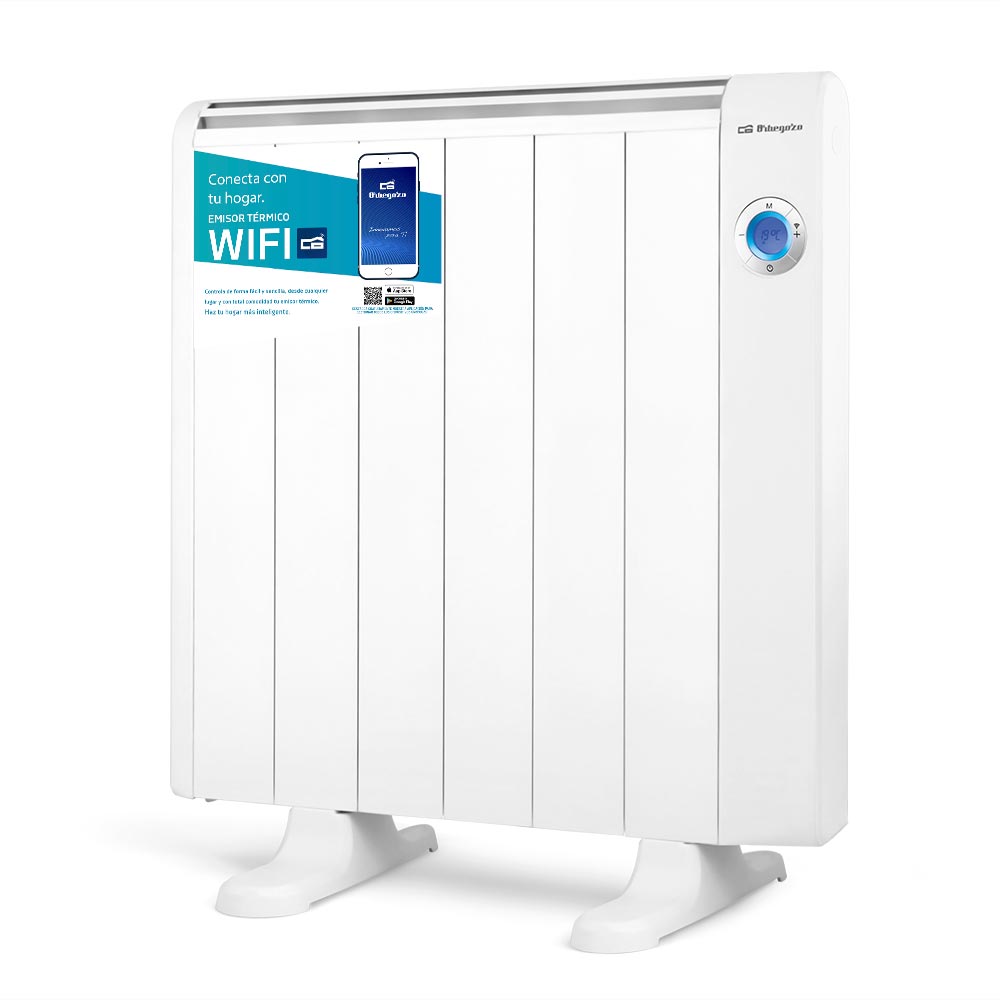
An electric thermal radiator is a portable electric radiator. You plug it in and it works: no pipes, no water, no boiler, no building work. Inside it has an aluminium body with several elements that heat up and store heat, and it gives that heat out in two ways at once. By convection, the warm air rises and circulates around the room. By radiation, the hot surfaces warm you directly, like winter sun on your face even when the air is cool.
What sets it apart from a fan heater is the thermostat. The radiator does not blow hot air non-stop. It brings the room up to the temperature you set and from then on works only as much as needed to hold it, switching the element on and off as required. The result is an even heat, without ups and downs, and without noise: it has no fan, so in the bedroom you hear absolutely nothing. And because it doesn’t stir the air up, it dries the air out less than a convector or a fan heater.
The Orbegozo RRW range in our heating collection is made of aluminium, with a display and WiFi control from your phone. That WiFi isn’t there to show off, and further down you will see why it is exactly what brings your bill down.
Thermal radiator versus fan heater, convector, oil-filled radiator and air conditioning in heating mode
No appliance is better than another in a vacuum. There is one that is better for what you are going to do with it. Here is the honest comparison.
| Technology | Speed | Inertia (heat after switching off) | Noise | What it is for |
|---|---|---|---|---|
| Electric thermal radiator (aluminium) | Heats up fairly quickly | Moderate | Silent | Keeping a room warm for many hours |
| Oil-filled radiator | Slower | High (keeps its heat after switching off) | Silent | A bedroom, if you don’t mind the weight and a slow start |
| Convector | Quick hot air | None (cools down as soon as it is off) | Low | Quick, occasional heat; dries the air more |
| Fan heater | Instant blast | None | Noisy | Bathroom and short spells (expensive over many hours) |
| Air conditioning in heating mode | Fast | High while running | Low to medium | The whole house, many hours (cheapest to run) |
To sum up the table: the thermal radiator comes into its own when you want one or two rooms comfortable for hours, quietly and at an even temperature, without having to knock anything through. That is what it was designed for.
The truth about running costs, no fairy tales
I will say it plainly, because what I am paid for is the truth, not hot air: there is no such thing as electric heating that uses little by magic. Every resistance-based electric heater delivers one kWh of heat for every kWh it consumes. Not one more. The best brand of radiator and the three-euro fan heater from the bazaar turn electricity into heat with exactly the same efficiency.
So where is the real saving? In not heating more than you need. A precise thermostat and a well-set schedule make the appliance heat only when you are there and only where you are, instead of running flat out all day. Add closing the bedroom door, not installing more power than the room needs and having a reasonably well-insulated house. The money is there, not in a miracle model that doesn’t exist.
How many watts your room needs (the rule of thumb of ~100 W/m²)
This is the question I get most often at the counter. The rule of thumb I use, and I stress that it is a guide and not a law carved in stone, is around 100 watts per square metre in a room with normal insulation. If the room is well insulated, it drops to 80-90 W/m². If it is poorly insulated, with high ceilings or a lot of wall facing the street (in other words, half the old houses in Albox), it goes up to 120-125 W/m².
Table: square metres, watts and elements (Orbegozo RRW range)
In the Orbegozo RRW range each element provides around 150-190 W, so the more power, the more elements. This table gives you the guide for normal insulation.
| Approx. floor area (normal insulation) | Recommended power | Elements | Model |
|---|---|---|---|
| Up to ~5 m² | 500 W | 3 | Orbegozo RRW 500 WiFi |
| ~7-8 m² | 800 W | 5 | Orbegozo RRW 800 WiFi |
| ~10 m² | 1000 W | 6 | Orbegozo RRW 1000 WiFi |
| ~13 m² | 1300 W | 7 | Orbegozo RRW 1300 WiFi |
| ~15 m² | 1500 W | 8 | Orbegozo RRW 1500 WiFi |
| ~18 m² | 1800 W | 10 | Orbegozo RRW 1800 WiFi |
If the house is poorly insulated or has high ceilings
This is where Encarni’s house changes the sums. A 12 m² bedroom in a modern, well-insulated flat is easily served by 1000 W. That same bedroom in a stone house, with three-metre ceilings, a large window and a cold outside wall, no longer works out at 100 W/m². There you need 120-125 W/m²: 12 m² times 120 W is 1440 W, so you go for the 1500 W model (8 elements) without a second thought.
The rule I gave her and give you: if you are torn between two power ratings and the house is old or cold, always go for the higher one. A radiator with a little power to spare heats the room and then holds the temperature with the thermostat without any strain. One that is too small spends the whole day at maximum, never reaches the temperature and costs more to run because it never gets a rest.
Examples by room: bedroom, study and small living room
- Bedroom (10-12 m²): by far the most requested. The RRW 1000 (6 elements) does well in an ordinary flat; in an old house or with high ceilings, go up to the 1500 W model. What makes the difference here is the silence: you sleep without hearing so much as a hum.
- Small study or home office (5-8 m²): where you spend hours sitting still. The RRW 500 (3 elements) for a small corner, or the RRW 800 (5 elements) if the room is somewhat bigger. Steady heat without drying your throat.
- Small living room (15-18 m²): the RRW 1500 for an average living room, or the RRW 1800 (10 elements) if it is large or gets cold. Note: for a very large living room used for many hours, read the section further down before deciding.
WiFi and scheduling are what really save you money
I mentioned it earlier: the WiFi control on the RRW range is not a toy for fiddling with your phone. It is the lever that turns that honest consumption into a reasonable bill. The idea fits in one line: the appliance should only heat when you are going to benefit from it.
- Schedule by time slots. Have it switch on half an hour before you wake up and turn down on its own while you are out. Getting up to a room that is already mild, without having had it at full blast all night: that is where you save.
- Switch it on before you get home. From your phone, on the way home, you start it up. You arrive to a warm room without having left it running all day.
- Lower the temperature at night. To sleep you don’t need the same temperature as when you are awake, and every degree you take off shows on the bill.
- Close the door. The oldest trick and the most effective. With the door open you are heating the corridor, not the bedroom.
When a thermal radiator is NOT your best option
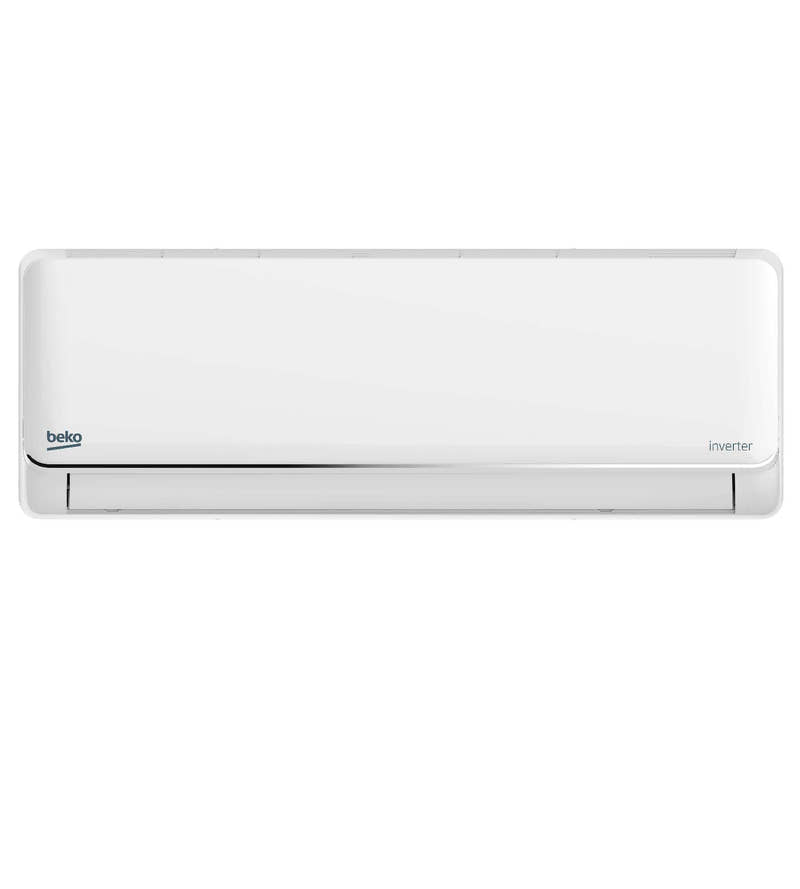
This is where someone else would sell you six radiators. I won’t. If what you want is the whole house warm for many hours a day, every day of winter, the cheapest thing to run is not a radiator: it is the heat pump, that is, an inverter air conditioner in heating mode. It gives roughly three times more heat for every kWh, because it doesn’t make the heat, it brings it in from outside. For heating a whole home continuously, there is no comparison.
The thermal radiator wins when you want one or two rooms, with no building work, in silence and with a dependable heat that holds no surprises. If your case is the whole house all day, take a look at the heating collection or, better still, come to the shop and we will talk about other solutions. Bear in mind that we sell and deliver heavy air conditioning equipment only in the Valle del Almanzora, the Levante Almeriense and Los Vélez, with our own van.
Extras for the cold Almanzora house
Often the best move is not more watts, but combining things.
- Electric blanket for the bed and the sofa. The Daga SOFTY blanket uses very little power and gives you direct warmth right where you feel it. For an evening on the sofa or for pre-warming the bed, nothing beats it on running cost. It doesn’t heat the room, but it heats you, which is sometimes all you are after.
- Dehumidifier against the damp of the stone. In the old houses of the valley the cold almost never comes alone: damp comes with it. A heavy, damp atmosphere feels colder and takes more heat to warm. The Orbegozo DH 5000 dehumidifier helps the same radiator work better and looks after your walls and clothes at the same time.
- Gas heater for the large living room. If your living room is one of those huge ones in an old house and you use it a lot, an Orbegozo HBF 90 butane gas heater with a blue flame puts out a lot of heat at once in large spaces. Each thing for its own job.
Quick verdict by case and where to see them in Albox
So that you leave with the ideas clear:
- Bedroom: electric thermal radiator. Silent, steady and programmable. Its natural home.
- Living room you use now and then: a properly sized thermal radiator; if it is very large, a gas heater.
- Bathroom: fan heater for a quick blast, and on with your day. Putting a thermal radiator there is using a sledgehammer to crack a nut.
- Whole house, many hours: heat pump. Don’t buy radiators for that.
Why buy from Híper Ocio
We have been in Albox since 1923, fourth generation of the same family. That isn’t a brochure slogan: when I recommend a 1500 instead of a 1000 it is because I have been inside the stone houses of this valley and I know how they behave in January. The thermal radiator is a small portable appliance, so we send it anywhere in Spain, with free national delivery from €49.99. And if you are local, you can collect it from the shop on Avenida 28 de Febrero and see it switched on before you pay.
Everything we sell comes with the 3-year legal guarantee. If something doesn’t suit you, you have 30 days to return it under our returns policy. And if you prefer to spread the payment, we have financing available, which we will explain with no small print. We are a village shop with a trade behind it, not a catalogue with no face behind it.
If you have questions about your particular room, message us on WhatsApp at 623 04 44 20 and we will tell you which power suits you according to the square metres and the state of the house.
Frequently asked questions about electric thermal radiators
How many watts of thermal radiator do I need per square metre?
As a guide, around 100 W per m² with normal insulation. It drops to 80-90 W/m² if the room is well insulated and rises to 120-125 W/m² if it is poorly insulated, has high ceilings or a lot of outside wall, as is often the case in old houses.
Is it true that there are low-consumption thermal radiators?
No radiator uses less by magic: all resistance-based electric heating gives 1 kWh of heat for every kWh consumed. The real saving comes from the thermostat and the schedule (heating only when and where it is needed), from not oversizing and from keeping the room closed off and well insulated.
Which is better, a thermal radiator or a fan heater?
It depends on the use. The fan heater gives an instant blast of heat, ideal for the bathroom or short spells, but it is noisy and expensive if you run it for many hours. The thermal radiator warms a room and holds it steady and silent for hours, which is what you want in a bedroom or a study.
What is the WiFi on a thermal radiator for?
It lets you schedule time slots and switch it on or off from your phone. That is exactly what cuts the bill: having it heat half an hour before you wake up and turn down while you are out, instead of running flat out all day.
Can I heat the whole house with thermal radiators?
You can, but it isn’t the cheapest to run if it is for many hours a day. For heating a whole home continuously, the heat pump (an inverter air conditioner in heating mode) gives roughly three times more heat per kWh. The thermal radiator wins when you want one or two rooms with no building work.
Can you send it to me, or is it collection from the shop only?
The thermal radiator is a small portable appliance, so we send it anywhere in Spain, with free national delivery from €49.99. You can also see it and collect it at our shop in Albox. Heavy air conditioning equipment, on the other hand, we deliver only in the Valle del Almanzora, the Levante Almeriense and Los Vélez.