Back to school 2026: how to choose the perfect backpack by age (guide by age group and weight)

It happens every year. Late July comes round, you are still in swimming-pool mode, and suddenly it is time to think about back to school. And of everything on the school supplies list, the backpack is the choice most people take lightly... and the one they regret most in October, when the child's back hurts or the zip bursts under a load of books.
At Híper Ocio we have been selling school supplies in Albox since 1923, and a great many backpacks have crossed our counter. The good news is that getting it right is not about spending more, but about choosing well according to your child's age, height and how they get to school (on foot, by car, with siblings). This guide is all about that.
We have organised it by age group, with real models that we have in stock, and with a golden rule about weight that is worth knowing by heart. Let's get started.

The golden rule: how much should the backpack weigh?
Before looking at designs and colours, the important question is weight. The Spanish Association of Paediatrics is categorical: a loaded backpack should not exceed 10% of the child's body weight, and under no circumstances 15%. In numbers: a child weighing 30 kg should not carry more than 3 kg on their back.
It sounds like very little, and that is exactly why it needs to be taken seriously. Constant overloading strains the lower and upper back muscles, causes fatigue and, over time, can make posture worse. This is not salesman's scaremongering: it is what paediatricians and physiotherapists repeat every September.
How does this translate when you are buying? Into three very concrete things:
- Wide, padded straps, with both worn at all times. Hanging the backpack from one shoulder is the most common mistake and the one that unbalances the load the most.
- Padded back panel and, if possible, with some structure, so that the weight sits close to the back and does not pull backwards.
- Several compartments to spread the weight: the heaviest items (books) against the back, the light ones at the front.
And one recommendation we always give: the backpack should sit at mid-back height, not hang down below the bottom. If your child wears it down by their knees, it does not matter how good it is; it is badly adjusted.
Backpacks by age: group by group
A nursery child's backpack is not the same as that of a teenager loaded with textbooks. These are our recommendations by age group.
Nursery and pre-school (2 to 5 years)
Here the backpack is more symbolic than functional: they carry their snack, a bottle, a school smock and little else. What we look for is something light, small and easy for them to open and close by themselves. Large zips with a pull tab, soft fabric and, above all, a design they like (that part is non-negotiable at this age).
A perfect example is the Perona Bags Sheep nursery backpack (€17.99): mini size, soft colours and a light structure designed for small bodies. If you are looking for something even cheaper for the snack bag or a change of clothes, we also have flat drawstring bags for under €4.
Shopkeeper's tip: do not buy a big one "so it lasts". At this age they grow so fast that a huge backpack looks ridiculous and sits unevenly. Buy for the size they are now.

Primary school (6 to 9 years)
This is the age group where real books, exercise books and a pencil case start to appear. The backpack is already carrying weight, so here the padded back panel and the straps stop being a luxury and become the first thing to check.
A very nice model is the Simba Código Lyoko large backpack with light, which, besides three compartments, has a light feature that little ones love, and at a bargain price (€5.99). For something with more personality and hard-wearing fabric, the Senfort Katacrak West Coast backpack (€24.99) is one of those that last year after year.
And a trend that drives children wild: reversible sequin backpacks, such as the Toybags Ranking Life reversible backpack (€19.99), which change colour when you run your hand over them. Fun and, note, with good capacity.
Upper primary and ESO (10 to 12 years)
The move to the last years of primary school and to ESO is when the weight is highest: more subjects, more books, more volume. This is when you really should consider a trolley backpack (we explain it in detail in the next section) or, at the very least, a sturdy backpack with a hip belt.
The Safta Superthings trolley-compatible backpack (€34.99) is a good example of that double life: it is worn on the back when the load is light and clipped onto a trolley on heavy-book days. "Convertible" models are the smartest buy in this age group because they cover both situations.
Secondary school and teenagers: the laptop backpack
From here on, the laptop and the tablet come into play, along with a use that is no longer just for school (after-school activities, meeting friends, the gym). The backpack stops being childish and becomes an everyday accessory that has to hold up.
That is what backpacks like the Enso Adept Power 42 cm laptop backpack (€39.99) are for, with a padded compartment made specifically for the laptop, or the Karactermanía PRODG ECO 2.0 backpacks (€34.99), made from recycled materials and with the urban design that teenagers like to carry outside school too. Here looks matter as much as function, and these backpacks deliver on both.

Trolley backpack vs rucksack-style backpack: which is worth it?
This is the question we get most often at the counter. And the honest answer is: it depends on how the child gets to school and how much they carry.
The trolley backpack has one big advantage: if the load is heavy, the child pulls instead of carrying, and that protects the back. The Safta University double trolley-compatible backpack (€41.99) is one of the most complete for this use, with a double compartment and a structure for the trolley. Its drawbacks: it weighs a little more when empty, it is bulkier, and at schools with lots of stairs or slopes (common in the villages of the Almanzora) it can be awkward.
The rucksack-style backpack is lighter, more versatile and more agile, but it puts all the weight on the shoulders. Our practical recommendation: if the child carries quite a lot of weight and there is wheeled access to the classroom, the trolley is worth it; if the weight is moderate or there are lots of stairs, a good backpack with a padded back panel and a hip belt is the better option. And if you are unsure, go for a convertible model, which gives you both options without buying two backpacks.
Materials, zips and details that make the difference
A good school backpack shows in the details you cannot see in the photo but can see after two months of use:
- Zips. They are the first thing to fail. Look for double zips of a good size with reinforced stitching. If, when you open the backpack in the shop, the zip feels stiff or "jumps", walk away.
- Fabric. High-weight polyester stands up better to scuffs and rain. Recycled fabrics (like those in the ECO range) have improved a lot and are now every bit as good as traditional ones.
- Reinforced base. The backpack is put down on the floor a thousand times a day. A rigid or reinforced base extends its useful life enormously.
- Stitching. Gently tug the straps when you buy it. The stitching on the handles is where the most tension builds up.
One last trick: if you buy online, adjust the straps as soon as it arrives and have your child try it on with a couple of books inside. That way you will quickly see whether the size is right.
Pencil cases and extras to complete the kit
The backpack is 80% of the decision, but a complete kit needs a little more. The pencil case is the second star of back to school, and here too it pays to choose sensibly: better a pencil case with a good zip and compartments than a pretty one that comes apart in a month.
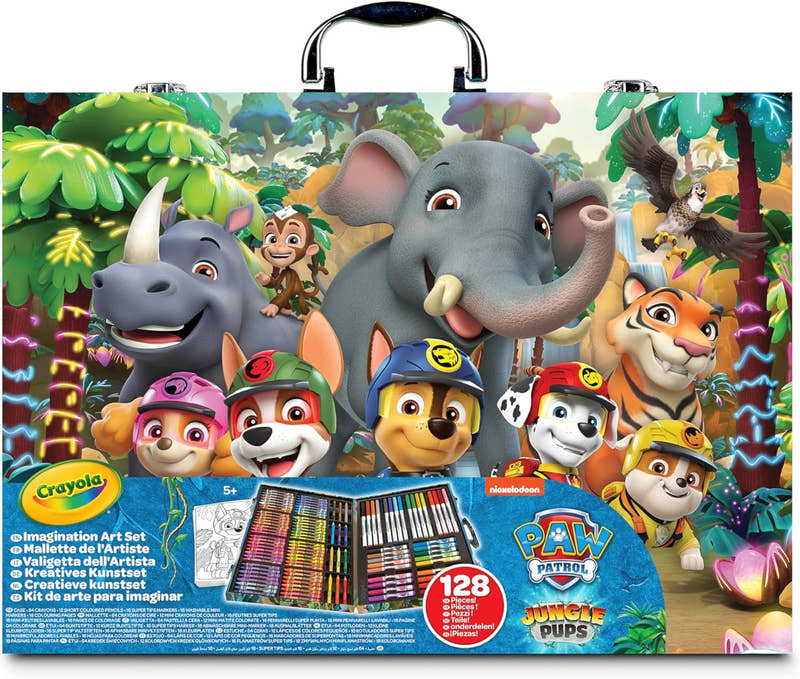
For those who also enjoy drawing and painting, the Art Planet painting case with 86 pieces (€9.99) is a classic that works as a pencil case and a craft set at once: markers, crayons, pencils and watercolours in one case. Ideal for primary school and for keeping at home.
Complete the list with name labels (so nothing gets lost), a reusable bottle and, if the school allows it, a lunch box for the snack. Small things that avoid upsets on the first day.
Delivery, financing and buying in the physical shop
Backpacks and school supplies are included in our free nationwide delivery from €49.99, so if you are kitting out more than one child, delivery will normally be free. Orders that do not reach that amount have a reduced delivery charge.
If you would rather spread the cost of back to school (which adds up between backpacks, books and clothes), you can pay in instalments with Klarna; you will find all the information on our financing page. And as with any purchase, you have 30 days for returns under our returns policy.
And if you live in the area, the best thing is to drop by the shop at Avenida 28 de Febrero s/n, Albox, and try the backpacks on in person: let your child load one up, adjust the straps and choose the design calmly. If you have any questions before coming, message us on WhatsApp at 623 04 44 20 and we will advise you.
Why Híper Ocio
We are not a big superstore or a faceless warehouse. We are a family shop in Albox founded in 1923, now in its fourth generation with Antonio Martínez Rosado at the helm, and members of the Toy Planet chain. That means two very concrete things for back to school.
The first: a real variety of reputable brands (Safta, Enso, Karactermanía, Senfort, Perona, Simba) and not four generic models. The second: when you ask a question, you get an answer from someone who has sold that backpack a hundred times and knows which one holds up and which one does not. We are not going to push the most expensive one if your child will carry little weight, nor the cheapest if you need something that lasts. We tell you what we would buy for our own children, because that is literally what we do.
A century behind the counter teaches you that a happy customer comes back, and one who was sold a backpack that breaks in October does not. That is why we prefer to sell you well rather than sell you a lot.
Frequently asked questions about school backpacks
What is the maximum weight my child's backpack should be?
According to the Spanish Association of Paediatrics, a loaded backpack should not exceed 10% of the child's body weight, and never 15%. A child weighing 30 kg should not carry more than 3 kg on their back.
Is a trolley backpack or a rucksack-style backpack better?
It depends. If the child carries a lot of weight and there is wheeled access to the classroom, the trolley protects the back more. If the weight is moderate or there are lots of stairs and slopes, a backpack with a padded back panel and a hip belt is more practical. Convertible backpacks offer both options in one product.
What size of backpack does a nursery child need?
A small, light backpack, sized to their current body. It is best not to buy a big one "so it lasts": at those ages they grow very quickly, and a backpack that is out of proportion sits unevenly and is uncomfortable.
Do you deliver backpacks all over Spain?
Yes. Backpacks and school supplies have free nationwide delivery from €49.99. Below that amount, delivery has a reduced charge.
Can I pay for back to school in instalments?
Yes: at checkout you can choose Klarna, which shows you the instalment options available for your purchase before you confirm. You will find the details on our financing page.
Can I come and try the backpacks in the physical shop?
Of course. We are at Avenida 28 de Febrero s/n, in Albox (Almería). You can come so your child can try the backpacks on, adjust the straps and choose calmly before deciding.
Updated in August 2026
With the 2026/27 school year almost here, we want to tell you what we are seeing most at the counter these days. The number one tip is obvious and almost nobody does it: in the first week of school, weigh the loaded backpack on your bathroom scales at home, with the books your child really carries that day, and compare it with 10% of their weight. If it is over, there is almost always something that can stay at school or at home, and that is fixed for free. The second is very seasonal: convertible trolley models and character designs are the first to run out of sizes as September goes on, so if you already know the size, it is better not to leave it until the week school starts. And if your little one is starting a new stage this year, take them to try the backpack loaded, not empty: it is the only way to see whether the back panel sits at their height.
If you are also thinking about a bicycle for this school year, we have published a new guide with a size chart by height and age: what size of children's bicycle to buy by age and height.