Cuántas frigorías necesito: guía 2026 para elegir aire acondicionado (split, portátil o multisplit)
De todas las preguntas que nos llegan al mostrador de Albox sobre climatización, la número uno no es «¿qué marca es mejor?». Es «¿cuántas frigorías necesito?». Y es la pregunta correcta, porque acertar con la potencia condiciona más el resultado que la marca, el WiFi o cualquier extra del folleto.
Un equipo pequeño para la habitación va a estar trabajando al 100% todo el día sin llegar a la temperatura, gastando más y desgastándose antes. Un equipo demasiado grande enfría de golpe, se para, arranca otra vez, y en un inverter eso significa perder justo la ventaja por la que ha pagado: el consumo bajo en régimen estable. Ni corto ni pasado.
Aquí le contamos cómo hacemos el cálculo nosotros —que no siempre coincide con las tablas genéricas de internet, porque aquí no estamos en Bilbao—, qué modelos concretos tenemos ahora mismo en tienda para cada rango, y las cosas que casi nadie le dice antes de comprar: la normativa de gases que cambia en 2027, la diferencia real entre un split y un portátil, y por qué septiembre es probablemente el mejor mes del año para instalar.

Actualizado en septiembre de 2026: precios y stock reales de esta semana
Hemos repasado esta guía en septiembre de 2026 con lo que hay de verdad en el almacén de Albox, porque los precios de climatización se mueven bastante de una temporada a otra y no tiene sentido dejarte leyendo cifras de hace meses.
En el escalón de 2.200–2.250 frigorías (9.000 BTU), el Orbegozo FDI95 sigue a 275 € y es el que más unidades tiene ahora mismo; el TCL S09F12 de 2.237 frigorías está a 289 €, y si busca la máxima eficiencia, el Daitsu Artic DS-9KZ con A+++ se mantiene en 399 €.
En 3.000 frigorías (12.000 BTU) ha entrado una opción que no estaba cuando escribimos la guía: el Daitsu Artic DS-12KZ, A+++ por 429,99 €, interesante si el equipo va a hacer también de calefacción en invierno. La alternativa más ajustada de precio en este escalón es el Infiniton SPTSE12A2 A++ con WiFi, a 349,99 €.
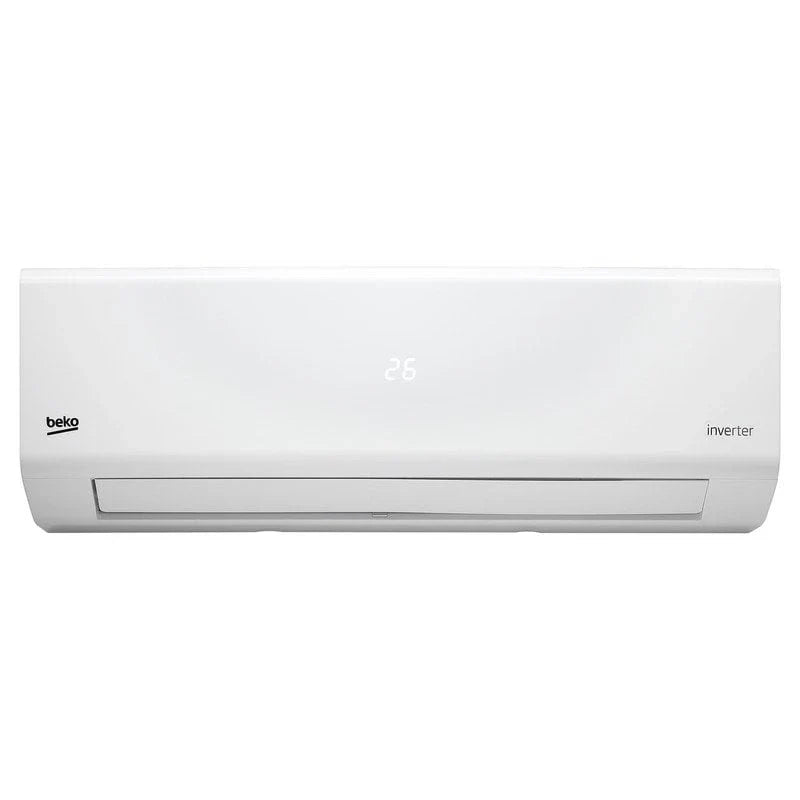
Para 4.500 frigorías tenemos el Beko BEHPG185 a 599 € y el TCL Elite S18F2S1 a 589 €; y en 6.000 frigorías, el Orbegozo FDI245 a 649 €.
Dos avisos honestos de septiembre. El primero: de varios de estos modelos quedan una o dos unidades, así que si le interesa uno en concreto, pregunte antes de contar con él. El segundo: es justo ahora cuando los instaladores de la comarca tienen agenda, cosa que en julio no pasa. Lo explicamos más abajo, pero si está leyendo esto en otoño, está en el mejor momento del año para montarlo con calma.
Frigorías, vatios y BTU: la misma cosa dicha de tres maneras
Antes de nada, quitemos de en medio la confusión de unidades. En las fichas verá tres números distintos que miden exactamente lo mismo: la capacidad de refrigeración del equipo.
- Frigorías/hora (frig/h): es la unidad que usamos en España de toda la vida. Equivale a una kilocaloría por hora.
- Vatios (W): la unidad del sistema internacional. 1 frigoría ≈ 1,163 W.
- BTU/h: la unidad anglosajona, la que ve en el nombre comercial de casi todos los modelos (9.000, 12.000, 18.000, 24.000). 1 W ≈ 3,41 BTU/h.
Traducido a las equivalencias que de verdad va a ver en la etiqueta:
- 2.250 frigorías ≈ 2,6 kW ≈ 9.000 BTU
- 3.000 frigorías ≈ 3,5 kW ≈ 12.000 BTU
- 4.500 frigorías ≈ 5,2 kW ≈ 18.000 BTU
- 6.000 frigorías ≈ 7,0 kW ≈ 24.000 BTU
Fíjese en que los modelos «de 9.000» son todos prácticamente iguales en potencia, vengan de la marca que vengan. Lo que cambia entre uno y otro no es la capacidad, sino la eficiencia, el nivel de ruido, la calidad del compresor y el servicio postventa. Por eso comparar solo el número de frigorías entre dos equipos del mismo escalón no sirve de nada.
Cuántas frigorías por metro cuadrado (y por qué aquí hay que subir el listón)
La regla que circula por internet es «100 frigorías por metro cuadrado». No está mal como punto de partida, pero está calculada para una vivienda media española con una orientación media y un verano medio. En el Valle del Almanzora, en Los Vélez o en el Levante Almeriense, con techos altos en casas antiguas, fachadas a poniente que reciben sol de plano hasta las nueve de la tarde y cuarenta grados a la sombra en julio, esa cifra se queda corta con frecuencia.
Nuestra regla de tendero, después de muchos años instalando por la comarca:
- Habitación bien orientada, aislada y con persiana: 90–100 frig/m².
- Habitación normal, orientación este o sur: 110–120 frig/m².
- Fachada a poniente, último piso, techo bajo cubierta o ventanal grande: 130–150 frig/m².
Un dormitorio de 15 m² bien orientado sale con 1.500–1.800 frigorías; como el escalón comercial más pequeño es el de 2.250, ese es el que le toca. Un salón de 30 m² a poniente pide 3.900–4.500 frigorías, es decir, el escalón de 4.500 y no el de 3.000, aunque las tablas genéricas le dirían lo contrario.

Los cinco factores que cambian el cálculo más que los metros
Cuando alguien nos da solo los metros cuadrados, siempre preguntamos cinco cosas más. Son las que de verdad mueven el resultado:
- La altura del techo. Las tablas asumen 2,5 metros. Muchas casas del pueblo tienen 3 o 3,20. Eso es un 20–25% más de aire que enfriar, y hay que sumarlo tal cual.
- La orientación y las ventanas. Un ventanal a poniente sin toldo puede meter tanto calor como dos personas y un horno encendido. Si el hueco acristalado supera el 20% de la superficie de la pared, sube un escalón.
- Bajo cubierta o entre plantas. Un dormitorio en última planta, con el tejado encima cociéndose todo el día, necesita bastante más que el mismo dormitorio en un primero.
- Cuánta gente y qué aparatos hay dentro. Cada persona aporta unos 100 W de calor. Un salón donde se juntan seis para ver el fútbol con la tele grande encendida no es el mismo salón vacío que mediste en abril.
- Si va a ser también la calefacción. Casi todos los equipos que vendemos son bomba de calor, y muchos vecinos calientan la casa en invierno con ellos porque sale más barato que el butano o el radiador eléctrico. Si ese es su plan, no se quede justo: en modo calor el rendimiento cae cuando la temperatura exterior baja de 5 ºC.
Qué equipo comprar según el tamaño de la habitación
2.200–2.250 frigorías: dormitorios y despachos (hasta 20–25 m²)
Es el escalón más vendido, y con diferencia. Sirve para dormitorios, despachos, habitaciones de invitados y salones muy pequeños. Ojo: es también donde más importa el nivel de ruido, porque va a dormir debajo.
En este rango tenemos el Orbegozo FDI95 de 2.250 frigorías por 275 €, que es la opción de entrada más ajustada con inverter y WiFi; el TCL Elite S09F4S1 de 2.200 frigorías por 309 €, con A++ en frío y una unidad interior notablemente silenciosa; y el AUFIT F09K de 2.200 frigorías por 299 €. Los tres son bomba de calor y refrigerante R32.

Si busca la máxima eficiencia porque va a tenerlo encendido muchas horas —teletrabajo, por ejemplo—, el Daitsu Artic DS-9KZ con clasificación A+++ por 399 € es un escalón por encima en consumo: cuesta unos 100 € más de entrada y los recupera si el uso es intensivo. Si el equipo va a funcionar dos meses al año a ratos, no compensa.
3.000 frigorías: el salón medio (25–35 m²)
El escalón de 12.000 BTU es el del salón-comedor típico. Aquí es donde más gente se queda corta comprando un 9.000 «porque es más barato y ya enfriará». No enfría igual: llega más tarde y trabaja siempre al límite.
Tenemos el Beko BEHPP120/121 de 3.000 frigorías con A++ e Inverter por 319 €, el Svan SAAS1202 de 3.000 frigorías por 299 € y el AUFIT F12K de 3.000 frigorías por 319 €. Los tres con WiFi de serie y bomba de calor. Si quiere A+++ en este mismo escalón, el Daitsu Artic DS-12KZ está en 429,99 €.
4.500 frigorías: salones grandes y espacios diáfanos (35–50 m²)
Si tiene salón y cocina abiertos, o un salón grande a poniente, este es su escalón. También si quiere enfriar el salón y que llegue algo al pasillo, aunque conviene ser realista: un split enfría la estancia donde está, y lo que pasa por una puerta abierta es siempre menos de lo que uno espera.
El AUFIT F18K de 4.500 frigorías está en 489 €, que para 18.000 BTU con inverter y WiFi es un precio muy contenido. Si prefiere marca con más recorrido, el Beko BEHPG185 está en 599 € y el TCL Elite S18F2S1 en 589 €.

6.000 frigorías: espacios abiertos grandes y locales (50–70 m²)
Aquí ya estamos hablando de naves pequeñas, locales comerciales, salones de casa de campo o espacios de doble altura. El TCL Elite S24F72S3 de 6.000 frigorías cuesta 799 € y el Orbegozo FDI245 de 6.000 frigorías está en 649 €. A partir de este tamaño, un consejo honesto: llámenos antes de comprar, porque muchas veces la solución correcta no es un split de 24.000 sino dos equipos más pequeños repartidos, y sale mejor de precio y de resultado.
Split, portátil, multisplit o cassette: cuál le toca de verdad
El split 1x1 de pared: la opción por defecto
Una unidad exterior, una interior, un tubo entre las dos. Es lo más eficiente, lo más silencioso dentro de casa y lo más barato en relación potencia-precio. Requiere instalación por técnico (taladro pasamuros, línea frigorífica, desagüe de condensados y carga de gas) y es lo que recomendamos en el 90% de los casos.
El portátil: cuando no puede instalar, no cuando no quiere
Hay que ser claro con esto, porque es donde más decepciones vemos. Un portátil enfría, pero rinde bastante menos que un split de las mismas frigorías nominales, porque el compresor está dentro de la habitación (calienta) y porque el tubo de evacuación por la ventana deja siempre entrar aire caliente por las rendijas. Además hace mucho más ruido: el compresor lo tiene a dos metros.
Dicho eso, es la única opción real si vive de alquiler, si la comunidad no le deja poner la unidad exterior en fachada, si necesita frío en una habitación puntual o si el equipo lo va a mover de sitio. Tenemos el Artica AAP0929SM de 2.250 frigorías por 229 €, que además usa refrigerante R290 (propano), con un GWP casi nulo y sin problema normativo por delante. Si es su caso, es una compra sensata; si puede instalar un split, instala el split.

El multisplit: dos habitaciones, una sola exterior
Si quiere climatizar el salón y un dormitorio, tiene dos caminos: dos splits independientes (dos unidades exteriores) o un multisplit 2x1 (una exterior y dos interiores). El multisplit gana en estética de fachada y en espacio disponible; los splits independientes ganan en precio y en que si falla uno, el otro sigue funcionando.
Nuestro Artica ADM912EX14 multisplit 2x1 de 2.268 + 3.024 frigorías está en 699 € y se sirve bajo pedido. Un apunte técnico que conviene saber: en un multisplit, la unidad exterior está dimensionada para un uso simultáneo parcial, así que si va a tener las dos interiores a tope al mismo tiempo y todo el día, dimensiona con holgura o plantéate dos equipos separados.
Cassette y conductos: obra o falso techo
El cassette (empotrado en el techo, con difusión a cuatro vías) y los conductos son la solución más elegante y la que mejor reparte el aire, pero necesitan falso techo y una instalación bastante más cara. Tiene sentido en obra nueva o reforma integral; casi nunca compensa como sustitución de un split en una casa ya hecha. No los tenemos en catálogo web porque son proyectos que hay que presupuestar en casa, midiendo.
Inverter, R32 y la letra pequeña de la normativa
Inverter ya no es un extra, es el estándar. Un equipo inverter regula la velocidad del compresor en lugar de encenderlo y apagarlo, así que mantiene la temperatura más estable y consume bastante menos en uso continuado. Todos los modelos que hemos citado lo llevan.
Sobre el gas refrigerante sí hay novedad, y conviene explicarla sin alarmismos porque circula bastante confusión. El Reglamento europeo de gases fluorados (UE) 2024/573 fija un calendario de restricciones para los equipos nuevos: desde el 1 de enero de 2027 no se podrán poner en el mercado splits de menos de 12 kW con gases de GWP igual o superior a 750 —lo que deja fuera al antiguo R-410A—, y desde 2029 el umbral baja a 150, lo que dejará fuera también al R-32 actual (GWP 675) en favor de gases como el R-454C o el propio R-290.
¿Qué significa esto para usted si compra hoy? Poco, la verdad. Un equipo R-32 comprado en 2026 es perfectamente legal, seguirá teniendo mantenimiento y recarga de gas durante toda su vida útil, y ese calendario afecta a la venta de aparatos nuevos, no a los instalados. Lo que sí puede pasar es que los precios de los equipos suban en 2027-2028 durante la transición, como pasó cuando desapareció el R-410A. Si estabas dudando, ese es un argumento más para no dejarlo para dentro de dos años.
Un último apunte útil: si su equipo no trae WiFi de fábrica o quiere controlarlo desde el móvil, existe el adaptador WIDE Smart Kit USBWIFI por 29,99 €, compatible con varias marcas del grupo. Es una manera barata de modernizar un equipo que ya tiene.
Instalar en septiembre: la ventana que casi nadie aprovecha
Esto es puro conocimiento de tienda. En junio y julio nos llaman veinte personas al día con el mismo problema y los instaladores de la comarca van desbordados: se acaban las agendas, hay esperas de dos y tres semanas, y el stock de los modelos más buscados vuela.
En septiembre y octubre pasa justo lo contrario. Los técnicos tienen hueco, se puede fijar día y hora con margen, y el equipo queda montado y probado para el año siguiente sin que tenga que pasar una semana de agosto con ventiladores. Además, si su equipo es bomba de calor, lo estrenas calentando en noviembre en vez de esperar nueve meses a usarlo.
Y hay una razón práctica más: instalar con calma permite hacerlo bien. La mayoría de instalaciones malas que hemos visto (desagües que gotean en la fachada del vecino, tubos demasiado largos, unidades exteriores donde no ventilan) se hicieron con prisa en pleno agosto.
Por qué Híper Ocio
Somos una tienda familiar de Albox fundada en 1923, hoy en la cuarta generación con Antonio Martínez Rosado al frente. Vendemos electrodomésticos y climatización porque llevamos décadas haciéndolo, no porque sea una categoría de moda.
Lo que ofrecemos y lo que no, sin adornos:
- Entrega con furgón propio en el Valle del Almanzora, Levante Almeriense y Los Vélez. Los aires acondicionados y el resto de gama blanca no se envían fuera de esa zona: los llevamos nosotros, no una agencia. Si está fuera de la comarca, puede recoger en tienda.
- La instalación se presupuesta aparte, y la hace un técnico frigorista con carné de manipulación de gases. No la incluimos en el precio del equipo porque cada casa es distinta —metros de tubo, altura, dificultad de acceso— y prometer un precio cerrado sin ver la instalación sería mentir.
- Le decimos que no cuando el equipo que quiere no es el que necesita. Preferimos venderle un 12.000 que le sirva a venderle un 9.000 que le decepcione.
- Pago a plazos con Klarna. Puede consultarlo en nuestra página de financiación.
- Derecho de desistimiento de 30 días según nuestra política de devoluciones. Tenga en cuenta que un equipo ya instalado por un técnico, con la línea frigorífica hecha y el gas cargado, no está en las condiciones de devolución que exige la ley; por eso insistimos tanto en acertar con la potencia antes de comprar.
- Estamos en la Avenida 28 de Febrero s/n de Albox, con los equipos puestos para que los vea y los oigas funcionando. Si tiene dudas con las medidas de su casa, escríbanos por WhatsApp al 623 04 44 20 con los metros y la orientación y le decimos qué escalón le toca.
Preguntas frecuentes
¿Cuántas frigorías necesito para una habitación de 20 m²?
Entre 2.000 y 2.400 frigorías en condiciones normales, y hasta 2.800–3.000 si la habitación está a poniente, bajo cubierta o tiene el techo por encima de 2,8 metros. El escalón comercial que le corresponde es el de 2.200–2.250 frigorías (9.000 BTU) en el primer caso y el de 3.000 frigorías (12.000 BTU) en el segundo.
¿Es mejor pasarse o quedarse corto de frigorías?
Si hay que elegir, pasarse un poco. Un equipo algo sobredimensionado alcanza la temperatura antes y luego trabaja al ralentí; uno pequeño no llega nunca y se pasa el día al máximo. Pero pasarse mucho también tiene coste: el equipo cuesta más, consume más en arranque y en un inverter provoca ciclos cortos que reducen la eficiencia y la vida del compresor. Un escalón por encima es prudencia; dos escalones es dinero tirado.
¿Un aire acondicionado portátil enfría igual que un split?
No. Con las mismas frigorías nominales, un portátil rinde en la práctica bastante menos, porque el compresor está dentro de la habitación generando calor y porque el tubo de evacuación por la ventana introduce aire caliente del exterior. También hace bastante más ruido. Es la opción correcta cuando no puede instalar una unidad exterior (alquiler, prohibición de la comunidad, edificio protegido), no cuando simplemente quiere ahorrarte el instalador.
¿Merece la pena pagar más por un A+++ frente a un A++?
Depende de las horas de uso. Si va a tenerlo funcionando muchas horas al día durante varios meses —una casa donde se teletrabaja, o un equipo que además hace de calefacción en invierno— la diferencia de consumo compensa el sobrecoste en pocas temporadas. Si el uso son dos meses de verano a ratos por la noche, el A++ es más que suficiente y el dinero está mejor invertido en una buena instalación.
¿Se puede comprar un aire acondicionado en Híper Ocio si vivo fuera de Almería?
Los aires acondicionados, electrodomésticos de gama blanca y televisores solo los servimos en el Valle del Almanzora, el Levante Almeriense y Los Vélez, con entrega en nuestro propio furgón. No hacemos envío nacional de estos productos. Sí puede recogerlos en la tienda de Albox si le viene bien. Para juguetes y pequeño electrodoméstico sí enviamos a toda España, con envío gratuito a partir de 49,99 €.
Mi equipo lleva R-32, ¿me voy a quedar sin gas cuando cambie la normativa?
No. El calendario del Reglamento (UE) 2024/573 restringe la puesta en el mercado de equipos nuevos —GWP igual o superior a 750 desde 2027 y a 150 desde 2029 para splits de menos de 12 kW—, pero no prohíbe mantener, reparar ni recargar los equipos ya instalados. Un split de R-32 comprado hoy tendrá servicio técnico y gas disponible durante toda su vida útil.